
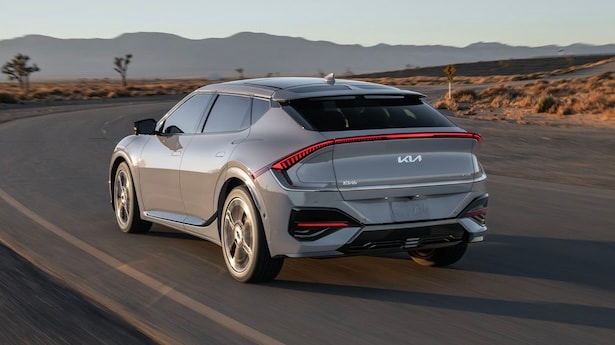
The electric vehicle market features two of the most competitive platform-sharing crossovers available today. Built on a shared E-GMP platform, both models offer advanced battery systems and ultra-fast charging capabilities. However, they target different driving preferences and lifestyles. The Kia EV6 appeals directly to those who want a driver-focused, fastback-style crossover with athletic handling. The Hyundai IONIQ 5 leans into a boxier, retro-futuristic utility aesthetic that prioritizes passenger headroom and cabin flexibility.
For working professionals commuting from Bedford, the daily drive often involves navigating the fast-moving traffic on Interstate 271. The highly aerodynamic profile of the Kia EV6 helps maintain excellent highway efficiency during these high-speed commutes. Selecting the right electric vehicle requires comparing these subtle design and performance differences in person. To explore these features firsthand, you can visit our Bedford showroom to compare trim levels. If you have immediate questions about vehicle availability or charging setups, feel free to give our team a call at (440) 659-2032.
Range and Battery Differences in Challenging Winter Climates
Battery capacities and driving range are top considerations for anyone transitioning to an electric crossover. The entry-level Light trim of the Kia EV6 features a 63-kWh battery and a single rear motor. Upgrading to the long-range variants equips the vehicle with a larger 84-kWh battery pack [1]. This larger battery allows the rear-wheel-drive configurations to achieve up to an EPA-estimated 319 miles of range on a single charge [1]. The Hyundai IONIQ 5 also utilizes an 84-kWh battery pack for its long-range models, with a slightly lower maximum EPA-estimated range of 318 miles in its rear-wheel-drive setup.
Northeastern Ohio winters present unique challenges for electric vehicle batteries, with prolonged sub-freezing temperatures and heavy road-salt usage. Local electric vehicle owners typically experience between 15% and 30% range loss on the coldest days of the year. To help combat this drop in efficiency, both crossovers offer an available cabin heat pump that warms the interior far more efficiently than a standard resistive heater. Keeping the underbody of your vehicle clean from winter road salt is also essential to protect the battery casing and structural frame over time.
Fuel Economy
Fuel economy and range by trim
| Feature | GT-Line | Light | Light L/R | Wind |
|---|---|---|---|---|
| MPG | — | 128 city / 103 hwy / 115 combined | 128 city / 101 hwy / 114 combined | — |
| EV range | 319 miles | 237 miles | 319 miles | 319 miles |
| Battery (kWh) | 84 | 63 | 84 | 84 |
Fast Charging Speeds and Battery Preconditioning Technology
Both of these electric crossovers excel at road-trip logistics thanks to their advanced 800-volt architecture [1]. When connected to a 350-kW DC fast charger, the Kia EV6 can charge from 10% to 80% in approximately 18 minutes under ideal conditions [1]. The Hyundai IONIQ 5 shares this same platform capability, making both vehicles some of the fastest-charging options on the market today. This rapid charging capability minimizes downtime at highway charging stations, allowing you to get back on the road quickly.
Cold temperatures can slow down battery charging speeds significantly, which is why both models come equipped with automatic battery preconditioning [1]. When you set a DC fast-charging station as your destination in the vehicle's navigation system, the battery heater automatically warms the pack to its optimal temperature before you arrive. This technology ensures that you get the fastest possible charging speeds, even during freezing winter weather.
For daily charging at home, most owners install a dedicated 240V Level 2 charger in their garage, which functions similarly to a heavy-duty clothes dryer outlet. A Level 2 setup easily fully recharges the battery overnight. While a standard 120V Level 1 household outlet can be used for emergency top-ups, it is too slow to serve as a primary charging method for daily commuting.
Engine & Performance
Powertrain specs by trim
| Feature | GT-Line | Light | Light L/R | Wind |
|---|---|---|---|---|
| Engine | Single Motor | Single Motor | Single Motor | Electric Motor |
| Horsepower | 225 hp | 167 hp | 225 hp | 225 hp |
| Torque | 258 lb-ft | 258 lb-ft | 258 lb-ft | 258 lb-ft |
| Transmission | 1-speed automatic | gear reduction unit | gear reduction unit | gear reduction unit |
| Drivetrain | Rear-wheel drive | Rear-wheel drive | Rear-wheel drive | Rear-wheel drive |
Design Philosophy Versus Everyday Utility and Cargo Capacity
The visual styling of these two crossovers highlights entirely different design philosophies. The Kia EV6 features a low, swept-back, fastback-inspired silhouette that emphasizes a sporty, modern stance. The Hyundai IONIQ 5 takes a different approach, utilizing sharp creases, pixelated LED lighting, and a boxier hatchback shape that mimics a retro-futuristic utility vehicle. This aesthetic difference has a direct impact on cabin space and daily utility.
Inside the cabin, the Kia EV6 offers a cockpit-like feel with a curved dual-screen display and a floating center console. It provides about 24 cubic feet of cargo space behind the second row [1]. Because of its more upright, boxy roofline, the Hyundai IONIQ 5 offers slightly more cargo volume at roughly 27 cubic feet behind the rear seats. This extra vertical space can make it easier to load taller, bulkier items.
For families in Parma who frequently make weekend shopping trips to the Shoppes at Parma or haul sports gear to local parks, the extra cargo volume of the IONIQ 5 is a practical advantage. However, the Kia EV6 remains highly versatile, featuring 60/40-split folding rear seats that fold nearly flat to accommodate longer cargo items.
Dimensions & Capacity
Capacity and dimensions by trim
| Feature | GT-Line | Light | Light L/R | Wind |
|---|---|---|---|---|
| Seating | 5 | 5 | 5 | 5 |
| Cargo | 24.4 cu ft | 24.4 cu ft | 24.4 cu ft | 24.4 cu ft |
| Curb weight | 4,398–4,520 lbs | 4,132 / 4,145 lbs | 4,398 lbs | 4,398-4,520 lbs |
| Towing | 2,700 lbs | — | 2,700 lbs | 2,700 lbs |
Performance Dynamics and Long Term Appeal for Driving Enthusiasts
When helping buyers compare these two on our showroom floor, they often ask whether the sportier handling of the EV6 makes a difference on the highway commute. The answer lies in how the suspension systems are tuned. The Kia EV6 features a firmer, more athletic suspension setup that minimizes body roll through corners, delivering a highly engaging driving experience. The Hyundai IONIQ 5 is tuned for a softer, more compliant ride that prioritizes passenger comfort over cornering dynamics.
The performance specifications of the Kia EV6 vary across its distinct trim levels, allowing buyers to choose their preferred level of power:
- Light: Powered by a Single Motor and a gear reduction unit producing 167 hp and 258 lb-ft of torque with a Rear-wheel drive layout.
- Light L/R: Features a Single Motor and a gear reduction unit generating 225 hp and 258 lb-ft of torque with Rear-wheel drive.
- Wind: Equipped with an Electric Motor and a gear reduction unit delivering 225 hp and 258 lb-ft of torque with Rear-wheel drive.
- GT-Line: Features a Single Motor and a 1-speed automatic transmission producing 225 hp and 258 lb-ft of torque with Rear-wheel drive.
For driving enthusiasts seeking maximum performance, the high-performance Kia EV6 GT delivers up to 641 hp in GT mode [1]. This performance model also includes a Virtual Gear Shift mode that simulates the tactile gear changes of a traditional mechanical transmission, providing an extra layer of engagement for enthusiasts [1].
Common Questions About the 2026 Kia EV6 and 2026 Hyundai IONIQ 5
Q: Does the 2026 Kia EV6 include a standard cabin heat pump for winter driving?
A: A cabin heat pump is standard on all all-wheel-drive configurations of the Kia EV6. This system recycles waste heat from the vehicle's electric motors and battery pack to warm the cabin, which preserves driving range during cold Ohio winters compared to traditional resistive heaters.
Q: What is the manufacturer warranty coverage on the Kia EV6 battery pack?
A: The Kia EV6 comes backed by an industry-leading 10-year/100,000-mile powertrain warranty, which specifically covers the high-voltage battery pack and all major electric drive components [1]. This long-term coverage ensures purchase confidence and helps maintain the vehicle's resale value over time.
Q: Are there any active federal tax credits available for purchasing a new EV6 today?
A: No, federal clean vehicle tax credits under §30D were terminated by Public Law 119-21 for all electric vehicles acquired after September 30, 2025. Present-day buyers do not qualify for these federal tax credits, though our sales team can help you identify any active manufacturer incentives or local state-level promotions.
Q: Can I charge the Kia EV6 using a standard 120-volt household wall outlet?
A: Yes, the Kia EV6 can be charged using a standard 120-volt Level 1 outlet, but this method is very slow and only adds about three to five miles of range per hour. It is best used for occasional top-ups, while a dedicated 240-volt Level 2 home charger is recommended for practical overnight charging.
Q: How long does the online credit pre-qualification process take?
A: Our secure online pre-qualification application takes only a few minutes to complete. Submitting your information ahead of time allows our finance team to review your options and secure competitive rates before you visit us for a test drive.
Categories:
News