
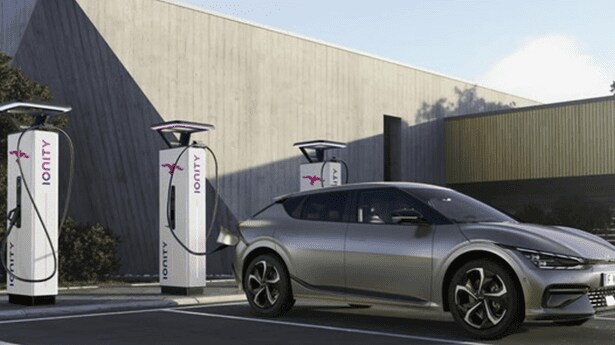
Kia EV battery preconditioning improves winter charging by actively warming the high-voltage battery pack to its optimal temperature range of 70°F to 86°F before you plug into a DC fast charger. Cold battery cells experience high internal electrical resistance, which causes the vehicle's thermal management system to limit incoming charge rates to protect the battery. By pre-heating the pack while en route, preconditioning allows 800-volt Kia electric vehicles to accept peak charging speeds up to 240 kW, restoring 10% to 80% battery capacity in about 20 minutes even during freezing weather.
Sub-freezing temperatures in Northeast Ohio present a distinct physical challenge for lithium-ion battery chemistries. When temperatures drop below freezing, the liquid electrolyte inside the battery pack thickens, slowing down the movement of lithium ions between the cathode and anode. If a high-voltage battery accepts high-amperage direct current while cold, lithium ions can accumulate on the surface of the anode rather than intercalating smoothly into it. This phenomenon, known as lithium plating, causes permanent loss of battery capacity and risks internal cell damage.
To prevent lithium plating, the vehicle's onboard battery management system automatically restricts charging power when cell temperatures are low. Without thermal preparation, an electric vehicle connected to a 350-kW fast charger might initially rate-limit charging to 40 kW or 50 kW until the battery gradually warms itself through internal electrical resistance. That thermal ramp-up can double or triple your time at a charging station during sub-zero conditions.
Battery preconditioning solves this cold-weather bottleneck by using an active heating loop to bring the cell temperature into the ideal window before charging begins. Powered by an integrated high-voltage battery warmer and assisted by an energy-efficient heat pump on equipped models, the system circulates warm coolant throughout the pack casing.
For drivers navigating cold winter morning commutes along I-271 near Bedford, activating battery preconditioning ensures your road trips and mid-day charging stops remain as fast and predictable as they are in mid-summer. If you ever have questions about winter EV maintenance or setting up vehicle features, stop by our Bedford showroom location or give our team a quick call.
Why Does Cold Weather Slow Down EV Fast Charging Rates?
Cold weather slows down EV fast charging rates because low ambient temperatures increase internal electrochemical resistance inside lithium-ion battery cells. At freezing temperatures, chemical reactions occur at a fraction of their room-temperature speed. To safeguard the high-voltage battery from permanent structural degradation and capacity loss, the vehicle's electronic control units automatically throttle incoming electrical current until cell temperatures reach safe thresholds.
Manufacturer DC fast-charging estimates, such as charging from 10% to 80% in about 20 minutes, assume a warm battery temperature around 72°F. When an unconditioned battery pack rests in sub-freezing outdoor weather, its internal temperature drops significantly. Plugging a cold battery directly into a high-output DC fast charger forces the battery management software to initiate a protective warming curve. During this initial phase, incoming power is strictly limited to prevent lithium plating on the anodes.
Several interconnected vehicle and environmental factors dictate how severely cold weather impacts fast-charging speeds:
- Internal Cell Resistance: Lower temperatures reduce ion mobility through the electrolyte, elevating internal resistance and generating excess heat under high current.
- Thermal Protection Thresholds: The battery management system enforces strict current limits until internal cell sensors register temperatures above 50°F to 60°F.
- Charger Output Restrictions: Public fast-charging hardware and cables also experience reduced efficiency and physical stiffness in extreme freezing conditions.
- Battery State of Charge: A battery arriving at a charger with a very low or very high state of charge experiences additional software throttling to protect cell longevity.
Modern Kia electric vehicles, such as the EV6 Wind equipped with an 84-kWh battery, utilize advanced thermal management systems to counter these winter slowdowns. Featuring an 800-volt charging architecture, an available high-efficiency heat pump, and an integrated battery warmer, these vehicles actively manage thermal energy to maintain peak capability year-round.
If you are considering making the transition to electric driving this season, explore our inventory of new Kia electric vehicles or get started early by submitting an online financing application with our team.
How Does Kia Battery Preconditioning Work and How Long Does It Take?
Kia battery preconditioning works by utilizing high-voltage heating elements and shared coolant lines to raise the temperature of the traction battery pack to its optimal window of 70°F to 86°F. The entire process typically takes between 20 and 45 minutes, depending on starting battery temperature, current state of charge, and ambient outdoor weather.
When preconditioning initiates, the vehicle activates an electric heating element located within the battery cooling and heating loop. On models equipped with an integrated heat pump system, thermal energy scavenged from the electric drive motors and power electronics is also redirected toward the battery pack to maximize efficiency. Coolant heated by these sources circulates through aluminum thermal plates sandwiched between the individual battery module cells, evenly distributing warmth throughout the pack.
Kia EV Winter Preconditioning Timeline
| 0–10 Min | Heating loop engages; high-voltage heater warms coolant. |
|---|---|
| 10–25 Min | Cell temp reaches ~50°F; resistance drops significantly. |
| 25–40 Min | Cell temp hits ~70°F–86°F target; ready for peak DC fast |
| charging up to 240 kW upon arrival. |
Drivers taking a first test drive usually ask whether setting a DC fast charger as their navigation destination is strictly necessary before they see the preconditioning indicator illuminate on the digital instrument cluster. The system operates automatically when integrated with onboard route planning, ensuring the pack achieves its target temperature precisely as you pull up to the charging stall.
Because heating a massive battery pack consumes energy directly from the high-voltage battery, preconditioning slightly reduces displayed driving range while active. However, the minor energy expenditure is far outweighed by the time saved at the charger, as arriving with a warm pack allows you to charge at maximum speed immediately upon plugging in.
For owners keeping their vehicles in peak condition through every season, maintaining proper vehicle fluids and components is essential. Learn more about maintaining your vehicle by ordering genuine Kia parts or checking out our selection of pre-owned vehicles.
How Do You Activate Preconditioning Manually or via the Kia Access App?
You can activate Kia battery preconditioning automatically through the built-in navigation system, manually via the infotainment EV menu, or remotely using the Kia Access smartphone application while connected to a Level 2 charger. Utilizing these tools ensures your vehicle is thermally prepared before you plug into a high-powered DC fast charger.
To activate preconditioning automatically while driving, use the onboard navigation system to search for and select a compatible DC fast-charging station as your destination. The vehicle calculates distance, current battery temperature, and arrival time, automatically turning on the battery warmer between 20 and 45 minutes prior to arrival. A dedicated icon or pop-up notification on the digital instrument cluster confirms that battery conditioning mode is active.
Kia EV Battery Preconditioning Methods
| Automatic | Set DC Fast Charger as destination in Kia Navigation. |
|---|---|
| Manual | Select "Battery Conditioning" in Infotainment EV Menu. |
| Remote | Schedule Remote Climate/Defrost in Kia Access App. |
For drivers who prefer manual control or choose chargers outside the native navigation database, manual activation provides complete flexibility:
- Press the EV icon on the central infotainment touchscreen display.
- Tap the settings gear icon in the lower corner of the EV menu.
- Scroll to Battery Conditioning Mode and check the activation box.
- Verify that current battery charge exceeds 20%, as the system automatically disables at low charge levels to preserve driving range.
When your vehicle is parked at home overnight and plugged into a Level 2 charger, you can also use the Kia Access app to schedule preconditioning alongside cabin climate control. Pre-heating while connected to grid power uses electricity directly from your home outlet rather than draining the high-voltage battery, allowing you to depart with a warm cabin, a conditioned battery, and full driving range.
To explore late-model electric vehicles equipped with these connectivity features, browse our certified pre-owned Kia inventory today.
Does Cabin Climate Control Automatically Heat the High-Voltage Battery?
Turning on cabin climate control does not automatically heat the high-voltage battery to optimal fast-charging temperatures. While interior heating controls regulate air temperature inside the passenger cabin for occupant comfort, high-voltage battery preconditioning is a separate thermal control process designed specifically to warm battery cells to 70°F to 86°F.
The vehicle utilizes distinct thermal circuits for cabin heating and battery conditioning, though equipped models link them via an advanced heat pump system. When you turn on cabin heat, the system draws thermal energy from an electric cabin heater or scavenges ambient heat via the heat pump to warm passenger air. While this process helps maintain cabin comfort, it does not raise battery pack temperatures quickly enough to enable maximum DC fast-charging speeds.
Cabin Heating vs. Battery Preconditioning
| Feature | Primary Objective | Target Temperature Range |
|---|---|---|
| Cabin Climate | Passenger comfort | 68°F – 74°F (air) |
| Preconditioning | Peak DC fast charging | 70°F – 86°F (battery cell) |
Running cabin climate control without battery preconditioning active means the battery pack remains at ambient outdoor temperatures during winter drives. If you navigate directly to a fast charger relying only on cabin heat, the battery will still arrive cold, resulting in throttled charging speeds and longer charging stops.
To achieve optimal charging performance, both systems should be used strategically. Utilizing remote climate scheduling in the Kia Access app while plugged into home charging prepares both cabin and battery using shore power. While driving, keeping automatic preconditioning engaged via navigation ensures the thermal management system prioritizes battery warming as you approach a charging station.
If you want our factory-trained technicians to inspect your heating system or verify thermal coolant levels, consider scheduling a service appointment with our department.
What Winter Fast Charging Speeds Can a Kia EV Reach?
With battery preconditioning engaged, an 800-volt Kia electric vehicle can reach peak DC fast-charging speeds up to 230 kW to 240 kW during winter conditions. Proper thermal preparation allows the battery to accept high amperage immediately upon connecting, completing a 10% to 80% charge in about 18 to 20 minutes.
Without preconditioning, a cold battery connected to a 350-kW charging station in sub-freezing weather may initially peak between 40 kW and 70 kW. As electrical resistance slowly generates heat within the cells, charging power gradually ramps up, but total charging time can easily exceed 45 to 60 minutes. Preconditioning eliminates this initial delay by delivering the battery to the charger at its ideal 70°F to 86°F operating temperature.
Winter DC Fast Charging Comparison (10% to 80%)
| Condition | Peak Charging Rate | Estimated Charge Time |
|---|---|---|
| Preconditioned Pack | 230 kW – 240 kW | ~18 – 20 Minutes |
| Cold Unconditioned | 40 kW – 70 kW | ~45 – 60 Minutes |
Real-world winter driving performance is also influenced by environmental range impacts. In Northeast Ohio, winter electric driving range typically decreases by 15% to 30% on the coldest days due to dense air resistance, cabin heater usage, and reduced regenerative braking efficiency in freezing temperatures.
Vehicles like the 2026 EV6 Wind combine an EPA-estimated range of up to 319 miles of range (RWD) with standard Plug & Charge capability, which automates authentication and billing at compatible charging stations through Kia Charge Pass.
Whether taking winter drives toward the Lake Erie shoreline in Cleveland or commuting across suburban highway corridors, preconditioning ensures your EV maintains its fast-charging advantage across every season. If you are planning to upgrade your current vehicle to an electric model, start by valuing your trade-in online with our evaluation tool.
Common Questions About Kia EV Winter Charging and Battery Preconditioning
Q: What is the optimal battery temperature for DC fast charging a Kia electric vehicle?
The optimal internal battery temperature for peak DC fast charging on 800-volt Kia electric vehicles is between 70°F and 86°F. When battery cells rest within this thermal window, internal electrochemical resistance is minimized, allowing the vehicle to accept maximum charging current up to 240 kW. If the battery is below or above this ideal temperature range, onboard software automatically scales back incoming charging power to protect cell chemistry and long-term battery health.
Q: Will battery preconditioning work if the high-voltage battery charge level is low?
Battery preconditioning automatically turns off or refrains from activating if the vehicle's remaining state of charge drops below 20%. Because heating the high-voltage battery pack consumes electrical energy directly from the traction battery, the system prioritizes driving range to ensure you reach your destination safely. If you plan to use preconditioning on a winter trip, aim to navigate toward a fast charger before your battery drops below this 20% threshold.
Q: Does using a Level 2 home charger require battery preconditioning before charging?
Level 2 AC home charging operating at 240 volts does not require battery preconditioning prior to plugging in. Level 2 charging delivers lower electrical current (typically between 7 kW and 11 kW), which generates minimal heat and does not risk lithium plating in cold cells. However, scheduling remote climate control and cabin pre-heating via the Kia Access app while plugged into Level 2 power helps warm battery components using grid power before you depart.
Q: Can frequent winter fast charging damage a Kia EV battery pack over time?
Frequent DC fast charging in winter does not cause accelerated damage if battery preconditioning is properly utilized. Preconditioning warms the cell chemistry to safe operating temperatures before high-amperage current is applied, preventing damage such as lithium plating. Kia backs its electric vehicle powertrains with a comprehensive 10-year/100,000-mile limited powertrain warranty that covers the high-voltage battery pack against mechanical breakdown and abnormal capacity loss.
Q: How does Plug & Charge simplify fast-charging stops during winter road trips?
Plug & Charge simplifies winter fast-charging stops by eliminating the need to swipe credit cards or open smartphone apps in freezing weather. When linked to your Kia Charge Pass account, compatible charging stations automatically identify your vehicle, authenticate the session, and process billing as soon as you insert the charging cable. This seamless communication lets you plug in quickly, return to a warm cabin, and monitor charging progress directly from your dashboard display.
Understanding how battery preconditioning works gives you complete confidence when driving an electric vehicle through Northeast Ohio winters. From optimizing fast-charging speeds to preserving winter driving range, Kia thermal management technology ensures your vehicle performs reliably in every season. To experience Kia EV technology in person or discuss incoming inventory, visit us at 18180 Rockside Rd, Bedford, OH 44146, give our team a quick call, or take a moment to learn more about our team today.
Prices and MSRP referenced in this article are estimates for informational purposes only and do not constitute an offer to sell. See dealer for complete details. Fuel economy estimates shown may differ from official EPA ratings and should not be relied upon as a guarantee of actual vehicle performance.
Categories:
News