
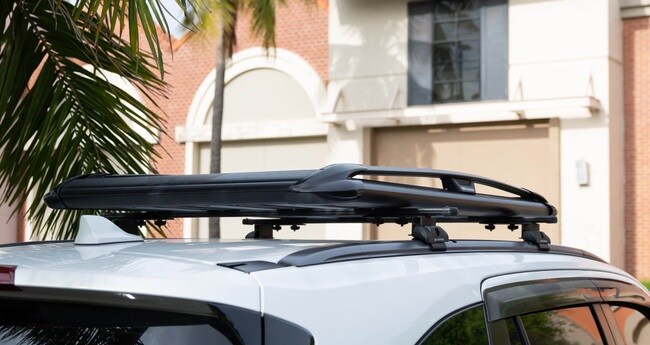
Kia roof racks operate as an integrated load-bearing system combining factory roof rails, mounted crossbars, and dedicated cargo carriers to distribute gear weight across the reinforced pillars of the vehicle chassis. For most Kia crossover and SUV models, the maximum dynamic roof load capacity is 165 lbs, which represents the total allowable weight of the crossbars, the carrier itself, and all cargo inside while the vehicle is in motion.
The structural foundation of this system begins with the roof rails running longitudinally along the roofline. Factory side rails transfer mechanical forces down into the vehicle's unibody frame, specifically aligning with the high-strength steel A, B, and C-pillars. Crossbars mount perpendicular across these side rails to create a secure platform for accessories such as enclosed cargo boxes, open gear baskets, kayak saddles, and bicycle mounts. Because dynamic forces multiply when turning, braking, and traveling over bumps, cargo must be balanced evenly between the front and rear crossbars to avoid localized stress points.
Selecting the right carrying setup depends directly on the configuration of your vehicle. Drivers exploring our new Kia inventory will find models equipped with integrated rail systems engineered to accept quick-release attachments. Securing an enclosed cargo carrier shields luggage from road grime and inclement weather, while open platform racks allow bulky sporting gear to be strapped down with ratchet tie-downs. For personalized guidance on crossbar compatibility for your specific model, give our team a quick call or visit our showroom at 18180 Rockside Rd to examine factory accessory packages in person.
Dynamic vs. Static Weight Limits: Can You Put a Rooftop Tent on a Kia SUV?
You can mount a rooftop tent on select Kia SUVs, but only if you install specialized heavy-duty aftermarket crossbars, as factory OEM crossbars are limited to a 165 lbs dynamic load rating and are not approved for tent camping. Dynamic weight capacity dictates the maximum load a vehicle roof can safely bear while navigating curves, acceleration, and emergency braking maneuvers, whereas static weight capacity measures the weight a stationary vehicle can support when parked.
While dynamic limits account for severe inertial stress, the static load rating of a modern SUV roof structure is substantially higher, routinely supporting between 500 and 800 pounds distributed across the frame. When parked at a campsite, the vehicle's structural pillars bear the downward compression of the tent, mounting hardware, and occupants without moving stress. However, factory crossbars are engineered solely around the dynamic 165 lbs limit. If two adults enter a rooftop tent mounted to factory crossbars, the downward force will exceed the load thresholds of standard bars, risking hardware deformation or roof rail distortion.
Equipping a rooftop tent requires an aftermarket rack system specifically rated for elevated static loads, paired with a tent that matches the vehicle roof footprint. When shoppers explore roof accessories on our showroom floor, buyers frequently ask whether factory crossbars can support a rooftop tent before planning weekend camping trips. Our team points out that larger family haulers like the Telluride or Sorento provide the necessary roof width and rail foundation for these heavy-duty tent setups. Drivers researching the Telluride should note that Kia did not produce a 2026 Kia Telluride in any trim, skipping directly from the 2025 model year to the redesigned 2027 model year. For outdoor enthusiasts shopping our pre-owned inventory, inspecting the roof rail type on previous model years ensures you select an SUV ready to accept heavy-duty overland accessories.
Kia Roof Rail Types and Panoramic Sunroof Clearance Requirements
Kia vehicles utilize three distinct roof mounting styles across the lineup: raised side rails, flush-mounted roof rails, and bare roofs requiring fixed clamp towers. On any Kia equipped with a panoramic sunroof, crossbar attachment hardware must maintain at least 1 to 1.5 inches of vertical clearance above the highest travel point of the glass panel to prevent binding or glass breakage during operation.
The physical design of your roof rails determines the exact foot pack required for mounting:
- Raised side rails feature an open clearance gap between the rail bar and the painted roof surface, allowing crossbar clamps to wrap fully around the rail.
- Flush side rails sit tight against the roof sheet metal, utilizing an integrated inner channel and precision grip points where the crossbar mounting foot locks securely.
- Bare roofs feature smooth sheet metal without rails, requiring specialized foot packs that clamp directly into the reinforced door frame openings beneath the weather stripping.
Panoramic glass roofs introduce strict clearance considerations because the front glass panel tilts upward before sliding rearward over the fixed rear glass section. If a crossbar is positioned directly in the path of the tilting panel, or if mounting clamps extend too far downward beneath the rail, the motor can force the glass into the metal bracket. Outdoor enthusiasts in Bedford packing camping gear and kayak cradles for outings near Bedford Reservation frequently choose low-profile aero bars, making clearance verification essential. Always cycle the sunroof slowly with the interior sunshade open after installing crossbars to confirm uninterrupted clearance before strapping down cargo. Drivers browsing our certified pre-owned Kia selection can examine both raised and flush rail configurations to see which style best fits their lifestyle.
Genuine OEM Kia Crossbars vs. Thule, Yakima, and Universal Mounts
Genuine OEM Kia crossbars are engineered to match the exact rail contours, weight ratings, and aerodynamic profiles of each specific vehicle, whereas premium aftermarket manufacturers like Thule and Yakima offer higher modular versatility with extended bar options. Inexpensive universal crossbars found on third-party online marketplaces present serious safety liabilities due to imprecise clamp engagement, elevated wind noise, and structural instability under highway wind shear.
Factory OEM crossbars fit cleanly flush between the side rails without projecting past the vehicle body, maintaining a quiet ride and an integrated factory appearance. These bars are calibrated to meet the vehicle's 165 lbs dynamic roof limit and install quickly using vehicle-specific mounting hardware. In contrast, Thule and Yakima systems utilize specialized foot packs and customizable crossbar lengths. These heavy-duty crossbars can extend slightly past the roof rails, providing wider platforms that accommodate multiple sporting mounts simultaneously, such as a cargo box alongside a bicycle rack. They also offer integrated T-slot channels for seamless slide-in mounting bolts.
The danger arises when drivers purchase budget universal crossbars advertised to fit all vehicles. These generic bars rely on one-size-fits-all clamp pads that fail to seat properly inside Kia flush-rail channels. Under sustained highway speeds, wind buffeting creates vibration that loosens generic bracket bolts, potentially gouging roof paint or causing catastrophic load detachment. Our genuine Kia parts center supplies factory-approved crossbars engineered specifically for your model year, ensuring complete structural integrity. If you prefer professional fitment, you can schedule an installation appointment with our factory-trained service technicians to ensure your rack system is torqued precisely to factory specifications.
Choosing Between Roof Cargo Boxes and Hitch Carriers for Fuel and EV Range
Hitch-mounted cargo carriers preserve vehicle efficiency significantly better than rooftop cargo boxes because hitch carriers remain shielded within the low-pressure slipstream directly behind the rear liftgate. A rooftop cargo box increases the vehicle's frontal surface area and creates substantial turbulent drag, which reduces gasoline fuel economy by 2 to 5 mpg and cuts electric vehicle highway range by roughly 10% to 15%.
Aerodynamic drag increases exponentially with speed, meaning roof boxes place continuous resistance on the powertrain during highway transit. When navigating highway corridors toward Cleveland along the open Lake Erie shoreline, crosswinds amplify the aerodynamic penalty of roof-mounted boxes. For electric vehicles and hybrids, carrying cargo on the roof compounds typical cold-weather efficiency losses, which range between 15% and 30% during freezing winter days.
Hitch cargo carriers mount into a Class II or Class III receiver hitch, keeping suitcases and equipment tucked away from oncoming airflow. The 2026 Kia Sorento, powered by a 2.5L engine and Sportmatic™ transmission, delivers an EPA-rated 20 mpg city / 29 hwy and features a maximum towing capacity of 3,500 lbs. Utilizing its receiver hitch for an exterior luggage platform keeps that efficiency steady while leaving the interior cabin and roofline clear.
Evaluating the tradeoffs between these two cargo carriers involves several practical factors:
- Rooftop cargo boxes provide secure, locking, weatherproof storage that keeps long items like skis and snowboards protected from road spray, while preserving clear access to the rear liftgate.
- Hitch-mounted carriers offer easy ground-level loading without requiring you to reach onto the roof, though they expose equipment to winter road grime and can block rear parking sensors or backup camera views.
If your family is outgrowing your current vehicle's cargo room and you need a larger platform with greater built-in storage, you can start by valuing your trade-in with an instant cash offer before stepping into a three-row SUV.
Practical Answers to Common Kia Cargo and Roof Rack Questions
Q: Do genuine Kia crossbars come with security locks?
Genuine OEM Kia crossbars and premium aftermarket systems include integrated keyed lock cylinders or security covers that conceal the mounting hardware. These locks prevent unauthorized removal of the crossbars from the roof rails and stop third parties from tampering with attachment brackets when your vehicle is parked in public lots.
Q: Can you take a Kia through an automated car wash with a roof rack attached?
You can drive through a touchless automated car wash with bare crossbars installed, but you must avoid friction washes with spinning mechanical brushes that can snag crossbar feet or rip off rubber channel strips. You must always remove cargo boxes, rooftop baskets, and sporting mounts before entering any automated wash facility.
Q: What should you do if an exterior cargo load shifts or fails on the highway?
Safely steer your vehicle to the right shoulder, activate your hazard flashers, and never attempt to adjust cargo on an active roadway. If hardware damage prevents safe travel, contact Kia Roadside Assistance at (800) 333-4542 for manufacturer-backed emergency support, authorized towing, and roadside dispatch to our certified repair facility.
Q: How does carrying roof cargo affect vehicle handling and emergency braking?
Hauling cargo on the roof raises your vehicle's center of gravity, which noticeably increases body roll during sharp turns and extends emergency stopping distances. Drivers hauling loaded cargo boxes should reduce highway cruising speeds, increase following distances, and account for extra lateral movement when driving through open crosswind corridors.
Q: Can roof crossbars be moved from an older Kia to a newly purchased model?
Crossbars generally cannot transfer between different vehicle models or generational body styles because roof widths, rail taper angles, and mounting channel profiles change between generations. You must verify exact part numbers and mounting dimensions to guarantee that clamping foot packs lock securely onto the new vehicle roof rail. If you are upgrading your vehicle, you can submit an online credit application ahead of time to explore flexible purchase arrangements for new models and accessories.
Information in this article is provided for informational purposes only and does not constitute an offer to sell. See dealer for complete details. Fuel economy estimates shown may differ from official EPA ratings and should not be relied upon as a guarantee of actual vehicle performance.
Prices and MSRP referenced in this article are estimates for informational purposes only and do not constitute an offer to sell. See dealer for complete details. Fuel economy estimates shown may differ from official EPA ratings and should not be relied upon as a guarantee of actual vehicle performance.
Categories:
News