
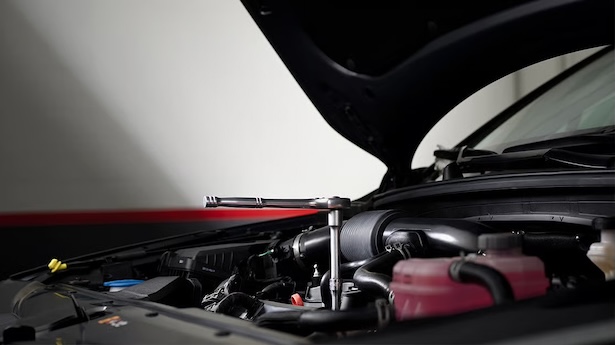
The Kia of Bedford service center provides complete routine maintenance and vehicle repairs, including full synthetic oil and filter changes, tire rotations and alignments, brake pad and rotor replacements, 12-volt battery testing, fluid flushes, spark plug tune-ups, and diagnostic check-engine light evaluations. Every maintenance visit includes a multi-point inspection to identify wear across key mechanical, electrical, and safety systems.
Keeping up with routine factory care ensures long-term powertrain reliability and protects engineered performance standards across the vehicle lineup. Essential maintenance starts with proper lubrication. Using full synthetic 0W-20 or 5W-30 engine oil along with an OEM Kia oil filter maintains proper oil flow, safeguards internal clearances, and prevents heat buildup during extended highway driving. During a standard tune-up, certified technicians evaluate ignition components, replacing worn spark plugs and engine air filters according to the schedule in the vehicle owner's manual to maintain smooth idling and fuel efficiency.
Regular fluid care is equally vital for steering, cooling, and braking systems. Technicians monitor coolant reservoirs and brake fluid levels, ensuring fluids remain between the MIN and MAX indicators. Drivers in Bedford relying on I-271 for daily commutes experience varying weather and stop-and-go traffic that place high demands on engine components. To ensure your vehicle stays up to date on required maintenance, visit our Rockside Road service department or give our staff a quick call to discuss recommended care intervals.
What Are the Warning Signs That Kia Brake Pads Need Replacement?
The primary warning signs that Kia brake pads need replacement include high-pitched metallic squealing, harsh grinding sounds during deceleration, an unusually soft brake pedal, increased stopping distances, or steering wheel vibrations when applying pressure.
Brake pads are manufactured with built-in metallic acoustic wear indicators designed to emit a distinct screeching noise when friction material wears thin. If this warning sound is ignored, the pad backing plate eventually contacts the brake rotor directly, causing metallic grinding, permanent rotor scoring, and significantly reduced stopping power. Mechanical feedback through the pedal also signals system issues; a spongy or sinking pedal often indicates air or moisture contamination in the brake line, while steering wheel pulsation points to warped brake rotors.
Periodic visual inspections ensure components are evaluated before critical safety thresholds are reached. Mechanics measure pad friction thickness, recommending replacement when rubber or ceramic material approaches 3 millimeters or less. Road salt used on winter highways around Bedford Heights accelerates surface corrosion on brake calipers and discs, making regular cleaning and inspection essential for preventing binding slides. For drivers performing DIY repairs or replacing worn hardware, using genuine Kia brake components ensures exact fitment, original stopping force, and quiet operation.
How Frequently Should a Kia Undergo Inspection and What Is Included?
A Kia vehicle should undergo a full multi-point vehicle inspection every 6,000 to 7,500 miles, which aligns with routine oil service intervals, or before major seasonal weather changes.
A comprehensive multi-point vehicle inspection takes approximately 30 to 45 minutes when performed by trained technicians. The process systematically evaluates critical mechanical, electrical, and safety components, categorized through a color-coded condition report. Green indicates optimal condition, yellow signals items requiring attention soon, and red alerts drivers to urgent safety or performance issues requiring immediate repair.
The inspection covers vital systems across the entire chassis:
- Fluid Levels & Condition: Engine oil, transmission fluid, coolant, brake fluid, windshield washer fluid, and power steering fluid.
- Braking System: Friction pad thickness, rotor surface condition, caliper slide movement, and hydraulic lines.
- Tires & Wheels: Tread depth measurement across all grooves, inflation pressure verification, physical sidewall condition, and wear pattern analysis.
- Underhood & Suspension: Battery health and terminal corrosion, drive belts, radiator hoses, shocks, struts, ball joints, and steering linkages.
- Exterior & Visibility: Headlights, taillights, turn signals, wiper blade condition, and cabin air filter cleanliness.
Vehicles subjected to severe driving conditions—such as frequent short trips under 5 miles, prolonged idling, extreme winter temperatures, or salt-treated roadways—require more frequent inspections of brake discs, steering components, and climate control filters as outlined in the Kia owner's manual.
What Tire Maintenance Services Does Kia Provide and What Interval Is Recommended?
Tire rotation is advised every 6,500 miles to ensure even wear, and wheel alignment checks are crucial after pothole impacts or once a year.
Consistent tire rotations equalize tread wear between front and rear axles. On front-wheel-drive configurations, front tires sustain faster degradation due to steering, weight distribution, and acceleration forces. Skipping rotations leads to irreversible tread cupping, tire noise, and reduced wet-surface traction. Drivers can monitor tread wear at home using a standard coin: placing a penny upside-down in the tread groove reveals critical wear if Lincoln's head remains visible, indicating the rubber is at or below the legal minimum of 2/32 inch. Placing a quarter into the tread provides an earlier benchmark; if Washington's head is completely visible, tread depth is at 4/32 inch, signaling reduced hydroplaning resistance on wet roads.
All-wheel-drive models require strict adherence to tread depth uniformity. Significant tread depth variances across axles force the transfer case and center differential to work continuously due to slight rotational speed differences, risking mechanical binding and overheating. Furthermore, ambient seasonal shifts alter inflation levels, as tire pressure drops roughly 1 PSI for every 10-degree drop in temperature. When maintenance is required, drivers can easily schedule service online to ensure balanced handling, proper TPMS calibration, and optimal alignment.
Can Purchasing Service Bundles and Plans Reduce Overall Kia Maintenance Expenses?
Purchasing maintenance bundles or prepaid service plans reduces overall ownership expenses by locking in planned service costs on essential routine services like oil changes, tire rotations, and multi-point inspections.
Bundling routine care provides predictable operational costs over the life of the vehicle while guarding against price increases on parts and labor. Combining oil changes with tire rotations and multi-point checks during a single visit saves both time and labor fees compared to scheduling each item separately.
Prepaid maintenance programs also encourage strict adherence to factory-recommended service intervals. Consistently following the manufacturer schedule protects factory warranty coverage—including Kia's 10-year/100,000-mile powertrain warranty—by maintaining verified service records. Preventing major mechanical failures through timely preventative care avoids costly downstream engine, transmission, or suspension repairs.
Where Is the Service Center Located and What Are Its Listed Hours?
The Kia of Bedford service center is located at 18180 Rockside Road, Bedford, OH 44146, with operating hours from 7:30 AM to 6:00 PM Monday through Friday and 7:30 AM to 3:00 PM on Saturday.
The facility features a dedicated service drive designed for quick drop-offs and efficient check-ins. Certified technicians utilize specialized diagnostic tools and factory-approved equipment to handle routine maintenance, major mechanical overhauls, and warranty service.
The department is closed on Sundays, with modified hours during major holidays. Drivers needing assistance or routine diagnostics can plan their visits around weekday early-morning hours or convenient Saturday appointments to minimize downtime.
Common Questions About Kia Maintenance and Care
Q: How do short daily commutes affect Kia factory service schedules?
Short trips under 5 miles in normal weather or under 10 miles in freezing temperatures qualify as severe-service driving under Kia owner guidelines. Frequent short trips prevent engine oil from reaching full operating temperature, leading to moisture accumulation and fuel dilution. Under severe schedules, fluids, brake components, and climate filters require more frequent inspection and earlier replacement intervals.
Q: What engine oil type is required during a routine Kia oil change?
Most modern gasoline-powered Kia engines require full synthetic 0W-20 or 5W-30 motor oil paired with a genuine OEM Kia oil filter. Synthetic oil provides superior thermal stability and flow characteristics across extreme winter cold and summer heat. Using OEM oil filters maintains correct internal oil pressure and filtration efficiency required by factory specifications.
Q: Is a multi-point inspection included with routine oil service visits?
Authorized Kia service departments routinely provide a complimentary multi-point vehicle inspection during scheduled oil and filter services. Technicians evaluate visual wear on brake pads, tire tread depth, battery health, wiper blades, drive belts, and fluid levels to keep owners informed of upcoming maintenance needs.
Q: How does ambient temperature impact the Kia Tire Pressure Monitoring System?
Cold ambient air causes air inside tires to contract, decreasing inflation pressure by approximately 1 PSI for every 10-degree Fahrenheit temperature drop. Rapid autumn or winter temperature drops often trigger the TPMS dashboard warning light. Inspecting and adjusting pressures when tires are cold restores optimal inflation and clears the warning icon.
Q: What action is required if the instrument cluster displays "Refill coolant"?
Displaying a "Refill coolant" warning message indicates that engine coolant has dropped below safe operational levels. Drivers should safely stop the vehicle, allow engine components to cool completely, and check the coolant reservoir. If coolant remains low, the vehicle should be professionally inspected to identify leaks and prevent engine overheating.
Prices and MSRP referenced in this article are estimates for informational purposes only and do not constitute an offer to sell. See dealer for complete details. Fuel economy estimates shown may differ from official EPA ratings and should not be relied upon as a guarantee of actual vehicle performance.
Categories:
Blogs